
Organizers
Organizing Committees
Honorific & Scientific Committees
Plenary & Invited lectures
Topics & Program
Important dates
Abstract submission & Registration
Registration fees & Payment
Prizes
Publication
Sponsors & Exhibition
Location, Venue & Travel
Accommodation
Contact us
The deadline for submiting the full-length articles at JTAC is extended until 1 st of December 2018
Welcome to Transylvania for ESTAC12!
New: download conference program
here
New: download Book of Abstracts of ESTAC12
here
The
12
th
European Symposium on Thermal Analysis and Calorimetry (ESTAC12)
will
be held between
27
th
and
30
th
of August 2018
in
Brasov, Romania.
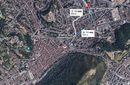
Brasov
is the second largest city in
Transylvania
&
the second most touristic place
in
Romania
, of course after the capital
Bucharest
.
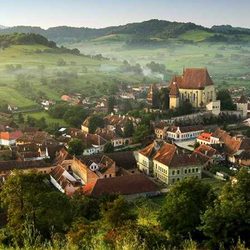
Located in the middle of the country, it is a very interesting city that starts in the
Carpathian Mountains
and continues in the fairy-tale
Transylvanian Plateau-covered by villages with fortified churches
.
The city of
Brasov
is the 7
th
urban center in the country with a population of 253,000 citizens, while the metropolitan area hosts 416,000 people.
The
city architecture
is a mix of styles: medieval constructions, as well as modern architecture buildings executed in Renaissance, Neo-Baroque, Classic, Empire, Eclectic, Art-Nouveau and Romanesque styles.
The
hystorical center architecture
is predominantly influenced by the
Transylvanian saxons
, but also by the austro-hungarian, romanian and jewish styles.
Brasov is very close to most important turistic locations of Romania, concentrated in the area: 20 km to
Rasnov Fortress
, 30 km to
Bran
(where is the
Bran Castle
aka
Dracula Castle
), 45 km to
Sinaia
(where is the
Peles Castle
of the Kings of Romania), 115 km to
Sighisoara
(one of the best preserved medieval fortified towns in Europe, which is an UNESCO World Heritage Site), and 145 km to
Sibiu
(the European Capital of Culture in 2007).
Indeed, here is the
Land of Castles
!
And it was just a small step for the
Count Dracula
- title character of Bram Stoker's 1897 gothic horror novel Dracula - to become the principal attraction in the foggy Transylvania, granting it a world wide image of
Land of Vampires
.
Actually, our Dracula is a real historical figure, the Romanian Prince:
Vlad III aka Vlad Draculea (The Devil/Dracula) aka Vlad Tepes (The Impaler)
.
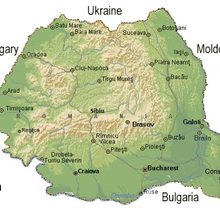
Brasov is situated at 170 km north-west of Bucharest, 145 km east of Sibiu, 170 km south-east of Targu-Mures, 270 km south-east of Cluj-Napoca, and 415 km east of Arad & Timisoara.
International Airports of Bucharest, Sibiu, Targu-Mures, Cluj-Napoca, Bacau, Oradea, Craiova, Arad and Timisoara are feasible destinations reasonably close to Brasov. A huge number of connecting flights with line companies or low-cost ones (Wizzair, Ryanair, Blue Air, etc.) are available. By train, bus or car it may be easily reached from all other Eastern and Central European states: Austria, Germany, Italy, Slovenia, Croatia, Czech Republic, Slovakia, Hungary, Poland, Ukraine, Bulgaria, Serbia and Turkey.
Transilvania University of Brasov
will host the 4-days meeting in its main auditorium known as the
Aula Magna "Sergiu Chiriacescu"
, which is located in the modern city center and very close to the historical one. The official language at ESTAC12 is English.
Premium Sponsors

|
|
Diamond Sponsor
|
|
|
Platinum Sponsor
|
|
|
| Gold Sponsor | Gold Sponsor |
|
|
| Gold Sponsor | Gold Sponsor |
|

|
| Gold Sponsor | Gold Sponsor |
Exclusive Sponsors
|
|
|
Welcome Cocktail & Conference Dinner Sponsor
Thermal analysis and calorimetry form a broad scientific family of techniques that track how materials respond to controlled changes in temperature. By measuring heat flow, mass change, and transitional behavior, researchers can identify phase changes, decomposition pathways, reaction kinetics, and stability thresholds. These methods are widely applied in the study of polymers, pharmaceuticals, metals, minerals, and complex composites, offering a window into the energetic signatures that define a substance. The discipline continues to evolve alongside modern instrumentation, supporting both fundamental characterization and quality-oriented work in research-driven settings where reliable thermal data is essential to interpretation and comparison across laboratories. European symposia dedicated to thermal analysis and calorimetry have long served as meeting points where the continental community gathers to share recent findings and refine shared practices. Such gatherings typically bring together established investigators, early-career researchers, instrument developers, and students, creating an environment where methodological questions can be discussed alongside emerging applications. Plenary and invited lectures often highlight advances in instrumentation, while contributed presentations showcase the diversity of systems being studied. The recurring European framing reflects a tradition of cross-border cooperation, allowing participants to engage with peers whose work spans different national research cultures and a wide variety of analytical approaches within the broader thermal sciences landscape. The scientific program of a major symposium is usually structured around a set of thematic topics that reflect current priorities in the field. These commonly include fundamentals of heat transfer, reaction kinetics, thermodynamics of materials, and the characterization of polymers, pharmaceuticals, inorganic substances, and bio-based systems. Instrumentation sessions often focus on advances in calorimeter design, simultaneous techniques, and software-supported data interpretation. Poster sessions and short oral contributions provide space for detailed methodological discussions, while specialized workshops may explore narrower themes. Together, these elements create a layered program that supports both broad learning and deep engagement with specific techniques, encouraging participants to step outside their immediate research focus. Beyond the technical sessions, conferences in this field typically emphasize prizes, publications, and opportunities for early-career researchers. Awards sponsored by scientific societies and journals recognize outstanding contributions, whether in the form of a distinguished lecture, a notable body of work, or an exceptional student presentation. Publication pathways through peer-reviewed journals allow selected contributions to reach wider audiences, extending the impact of symposium discussions beyond the event itself. Abstract submission and registration procedures are generally designed to be accessible, with clear deadlines that help participants plan their contributions. The combination of recognition, dissemination, and structured deadlines supports a healthy cycle of exchange within the international thermal analysis community. Hosting a symposium in a historically rich region adds a distinctive cultural layer to the scientific experience. Conferences in Transylvanian settings often use the surrounding landscape and architecture as a backdrop for social events, excursions, and informal conversations that strengthen professional connections. Medieval fortified churches, hilltop castles, and the varied urban fabric of nearby cities provide opportunities for guided tours and relaxed gatherings away from the lecture halls. The natural environment, framed by mountains, plateaus, and forested land, complements the conference atmosphere, offering participants a chance to experience regional heritage between sessions. Such settings remind attendees that scientific exchange and cultural exploration have long travelled together in the European symposium tradition. |